Khawa
Level Designer • 2024 • Unreal 4.27.2
Responsibilities
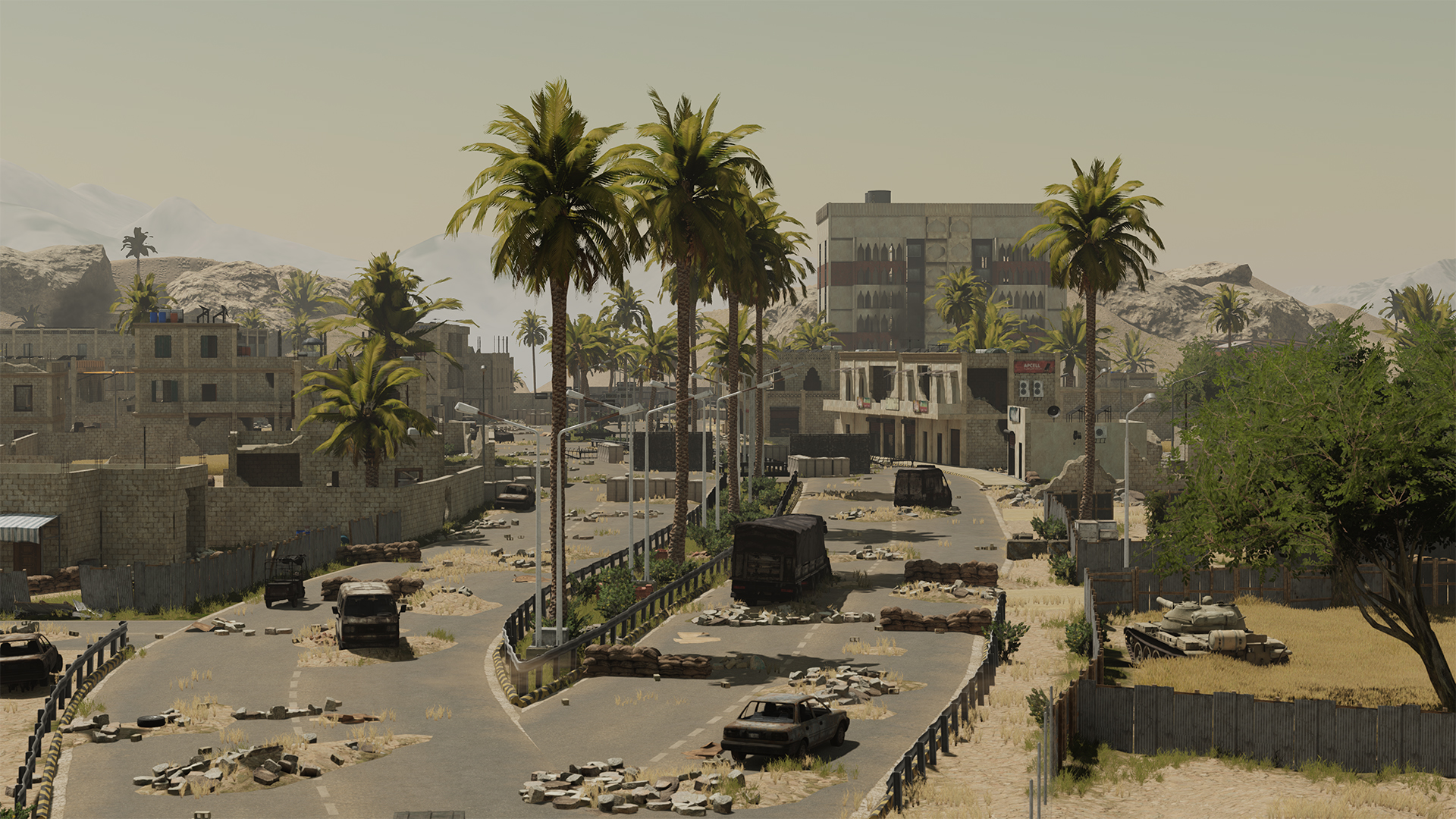
- I conducted research to develop a distinct architectural design language. I then translated this into a 2D level layout and a game mode plan, both created in Photoshop.
- I created a level blockout and iterated on the design based on gameplay feedback. I then replaced the grey box geometry with a modular kit provided by the environment artist.
- I conducted research using videos and stock imagery from a variety of locations to inform the aesthetic direction and support the development of the world’s narrative.
- Designed and refined gamemode layouts (TDM, CTF, Domination) with clear player flow and balanced objective placement.
- Conducted iterative playtesting to evaluate flow, pacing, and engagement, adjusting layouts based on feedback.
About This Project
The development of Khawa began with a simple idea: take inspiration from real-world architecture and environment, then translate it into a fun and fully playable experience. I started by researching satellite maps of areas the will fit the current, studying the density of its neighborhoods and the organic patterns of its streets. One street block in particular stood out for its layered geometry and potential for gameplay variety.
Processes
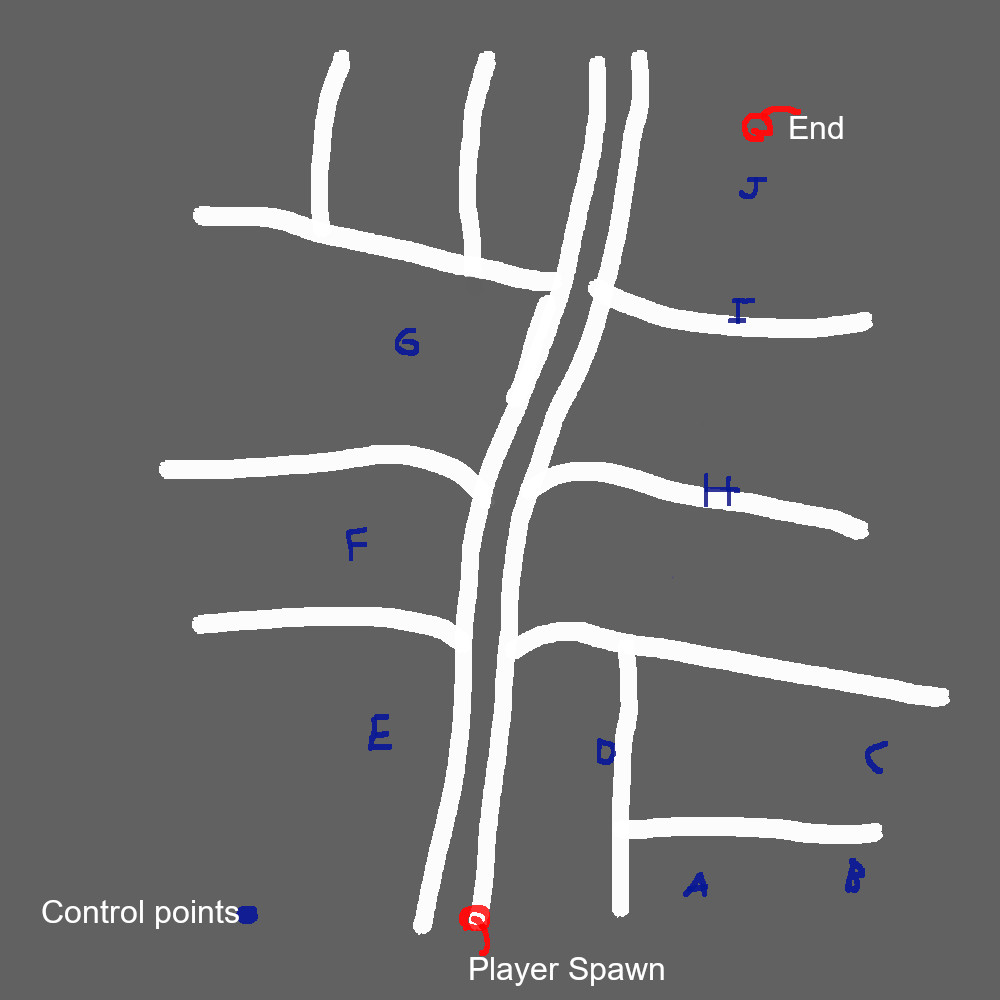
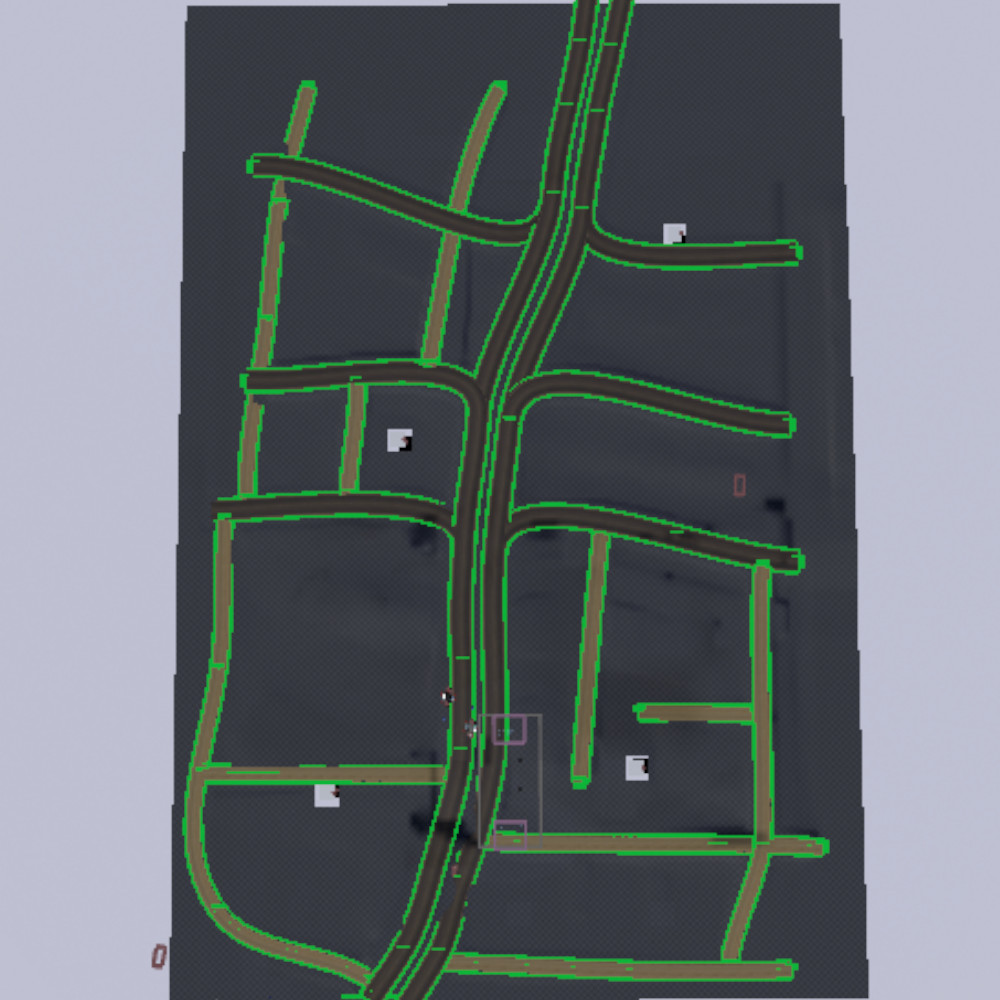
The sketch then served as the foundation for a more detailed design process inside Unreal Engine.
Once in-engine, I began iterating on scale and proportions. Establishing the correct sense of space was critical—not only for readability and navigation but also for ensuring that player movement felt natural and engaging. Through repeated adjustments and testing, I refined the layout until the flow struck the right balance between pacing, sightlines, and strategic opportunities.
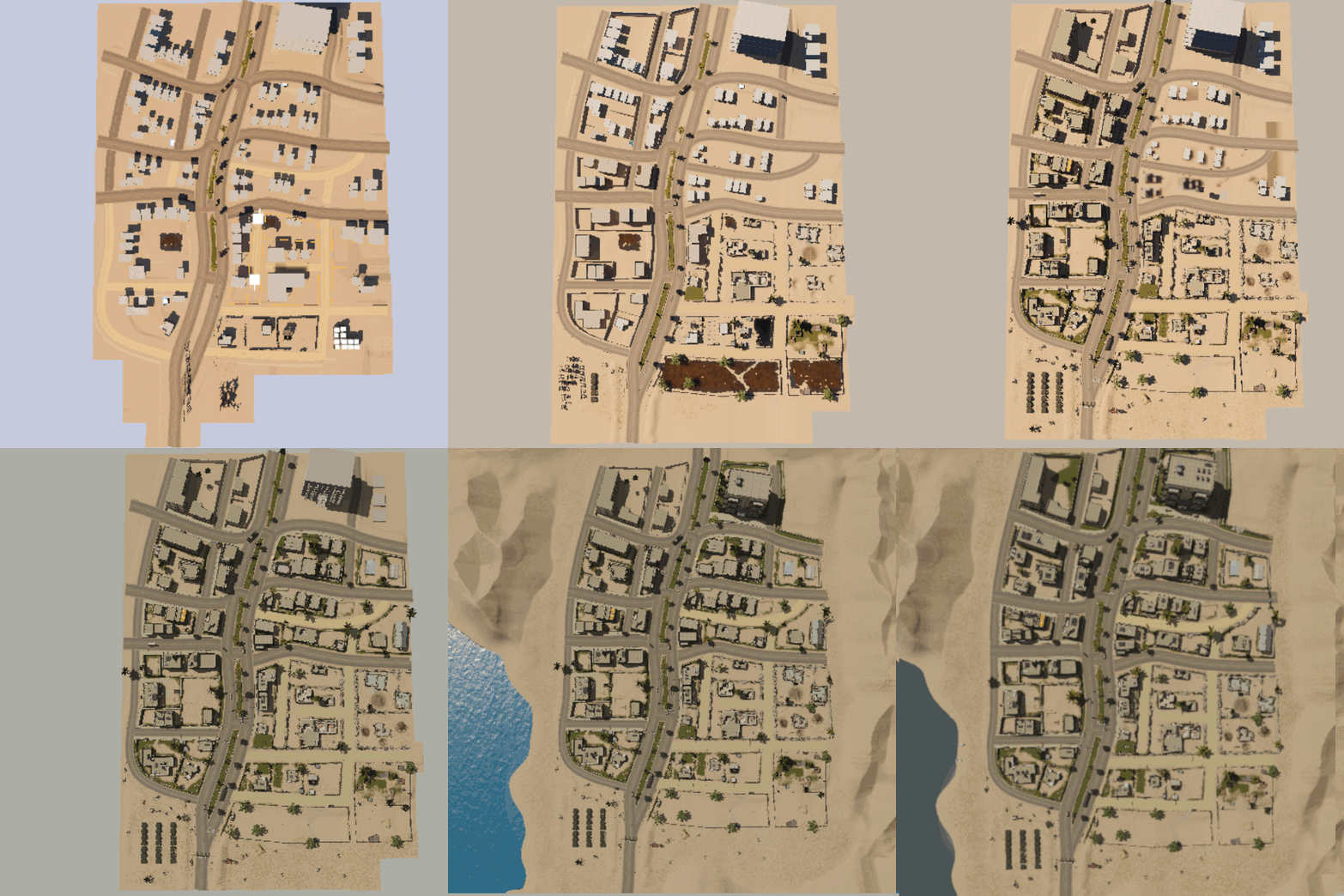
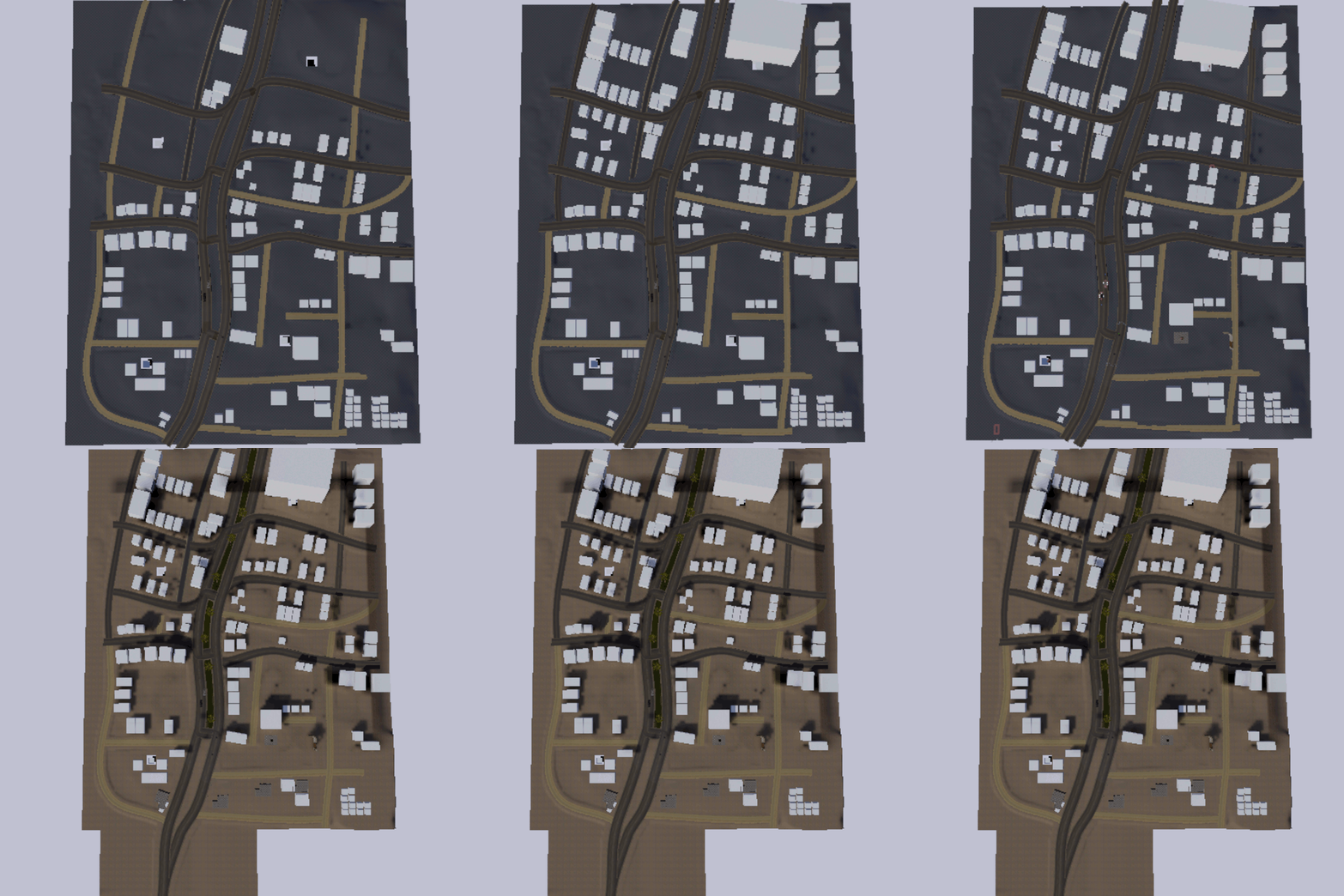
With the flow established, I transitioned into the whiteboxing phase. This involved constructing the environment in simplified geometry, focusing on core shapes, spatial hierarchy, and the relationship between interior and exterior spaces. Whiteboxing gave me the flexibility to test gameplay quickly, allowing for rapid iteration while keeping the focus on player experience rather than visual fidelity.
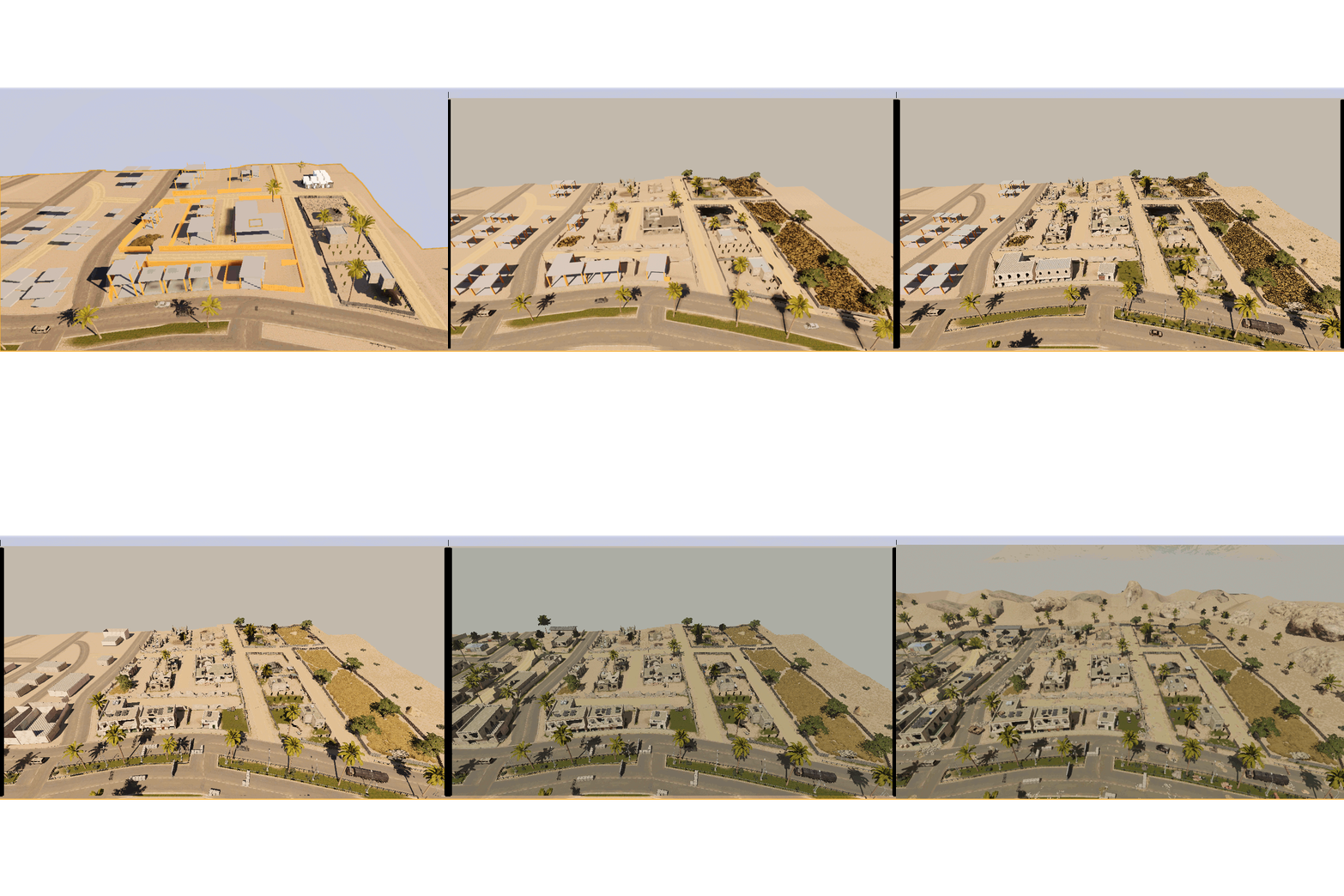
Iteration was key at this stage. I refined the whitebox through playtesting and feedback, making structural adjustments to improve pacing, optimize sightlines, and ensure that objectives naturally guided the player forward.
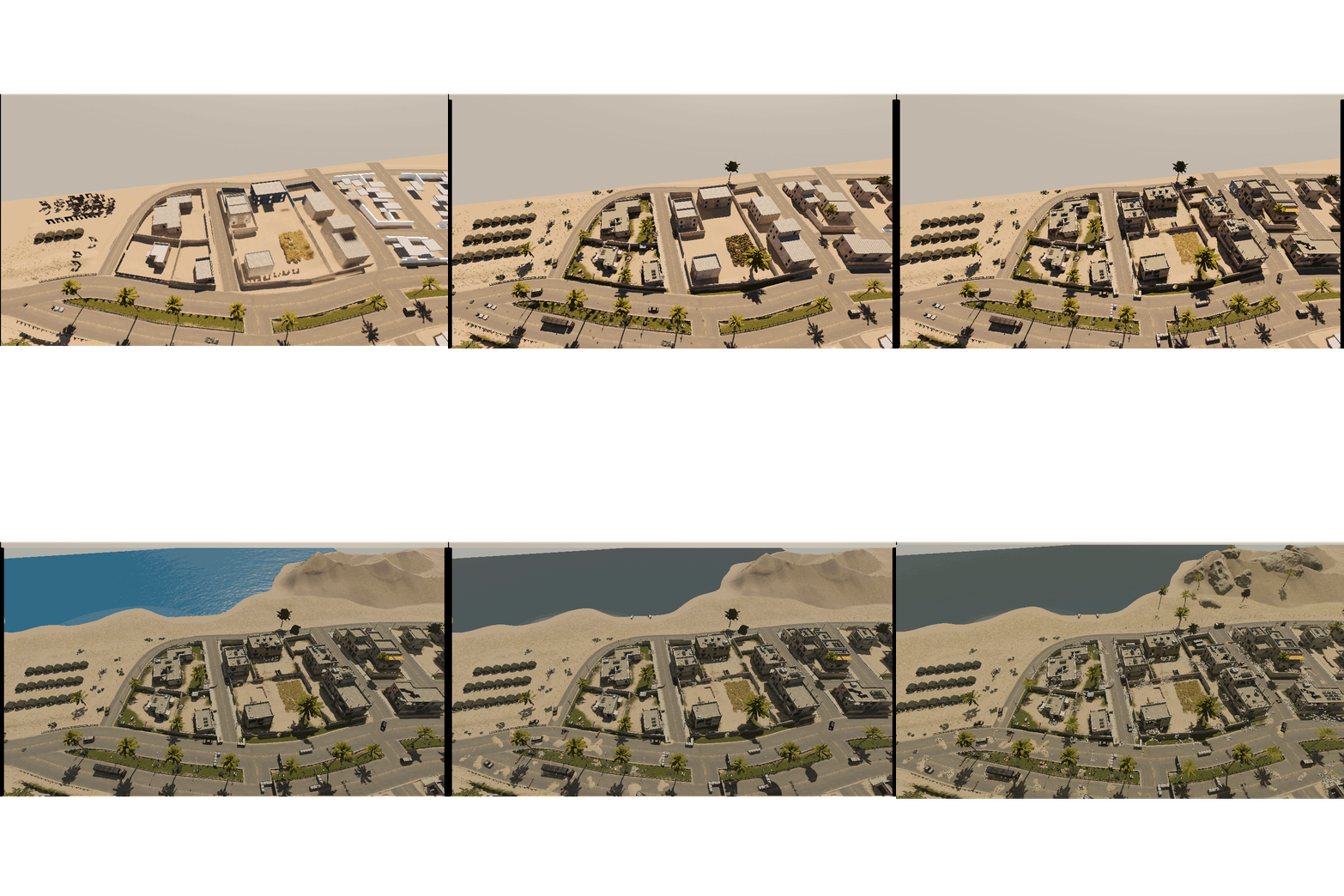
Over time, these iterations transformed a simple layout into a fully functional gameplay space with a clear sense of flow. I layered in environmental storytelling elements—machinery, surface textures, and subtle lighting contrasts—to emphasize the militarized setting.
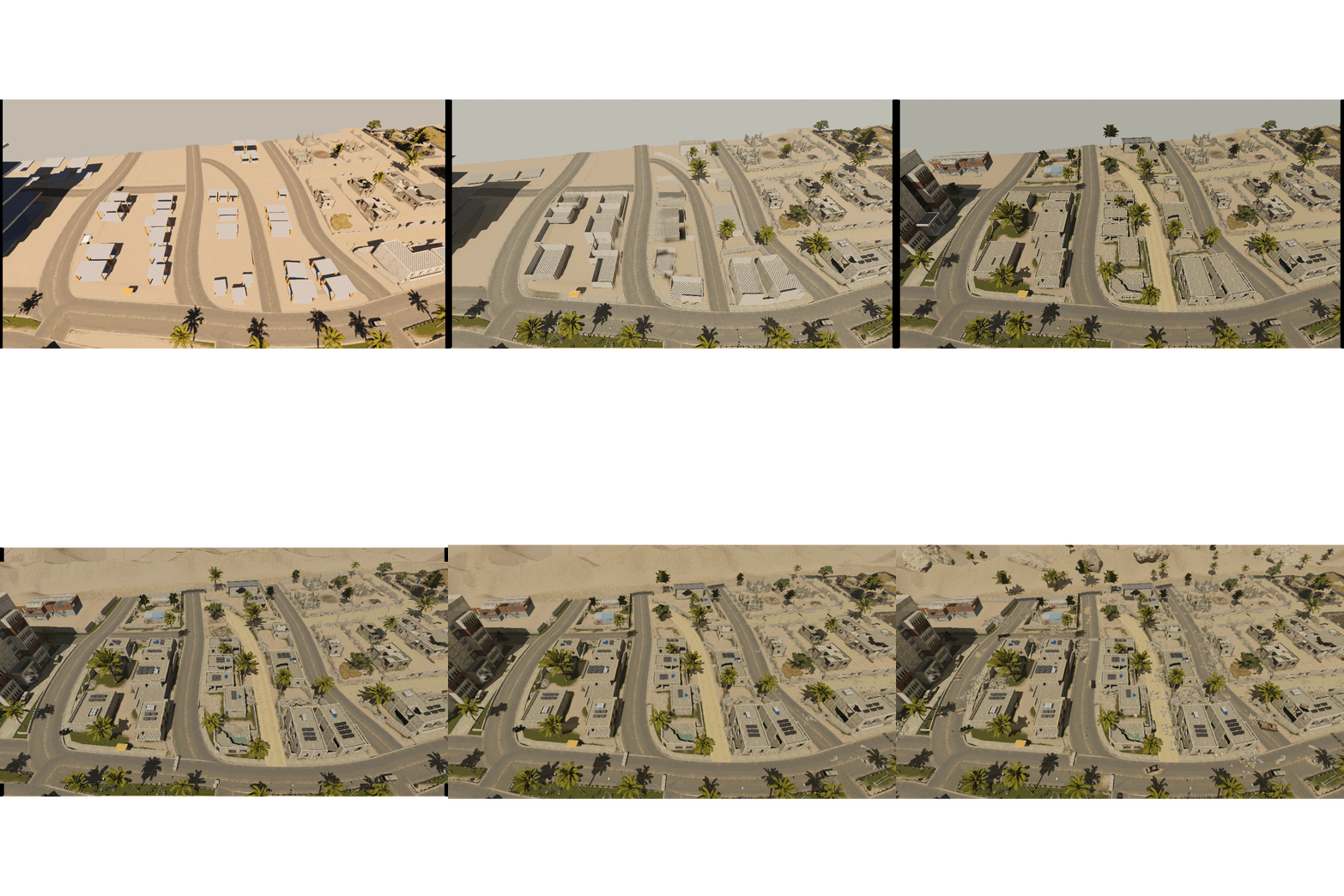
Once the whitebox reached a stable state, I shifted toward defining the major architectural forms. Reference imagery played an important role here, guiding me in shaping the buildings to reflect real-world authenticity while still supporting gameplay objectives.
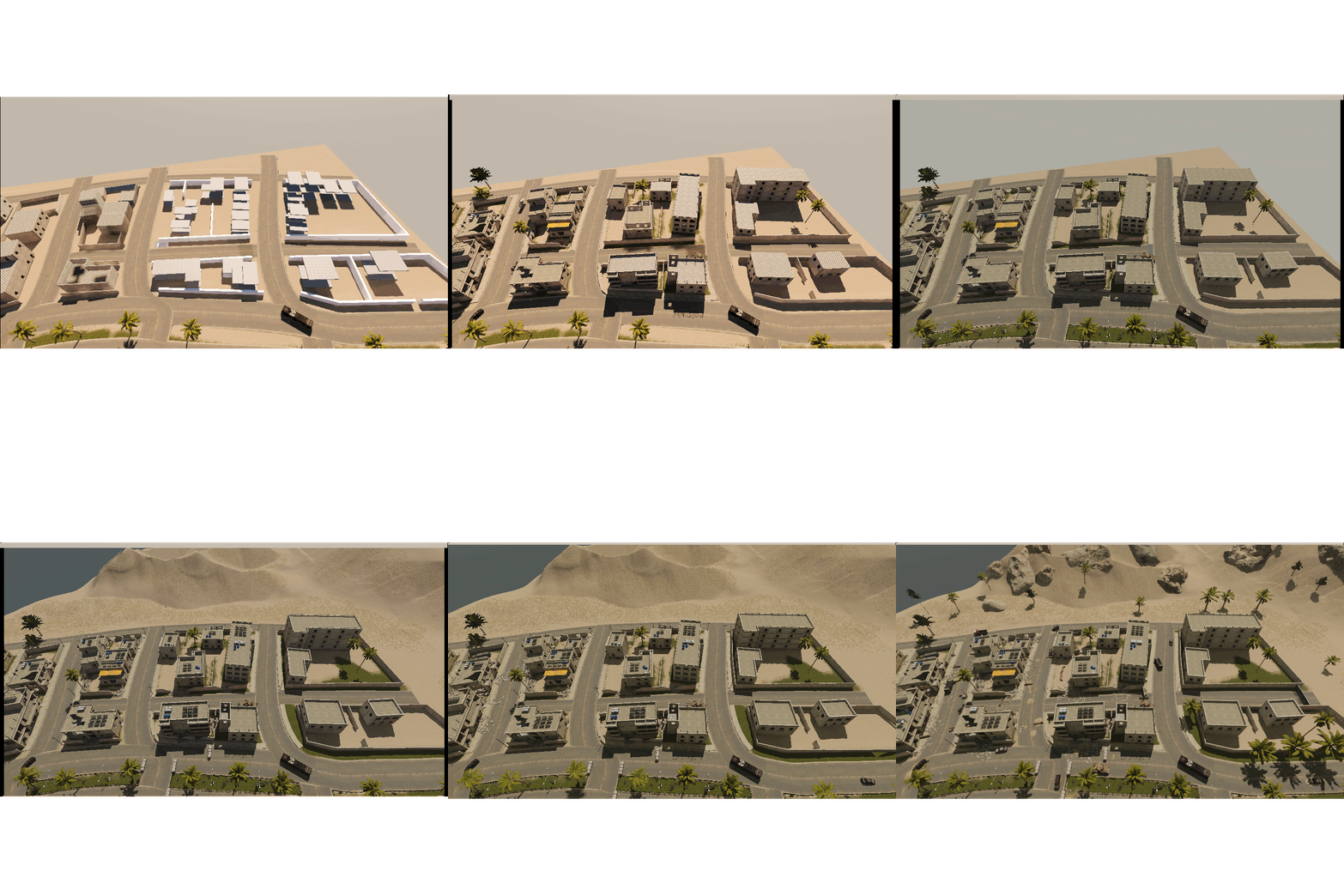
To handle the complexity of the environment, I divided the map into four quadrants. This approach allowed me to systematically refine each section, ensuring consistency in scale, balance in combat opportunities, and smooth transitions between areas.
Finally, I carried out a polish pass, fine-tuning details and balancing visual hierarchy to bring cohesion across the environment. These last refinements pulled the space together, creating a finished, immersive experience that is both technically sound and narratively compelling.
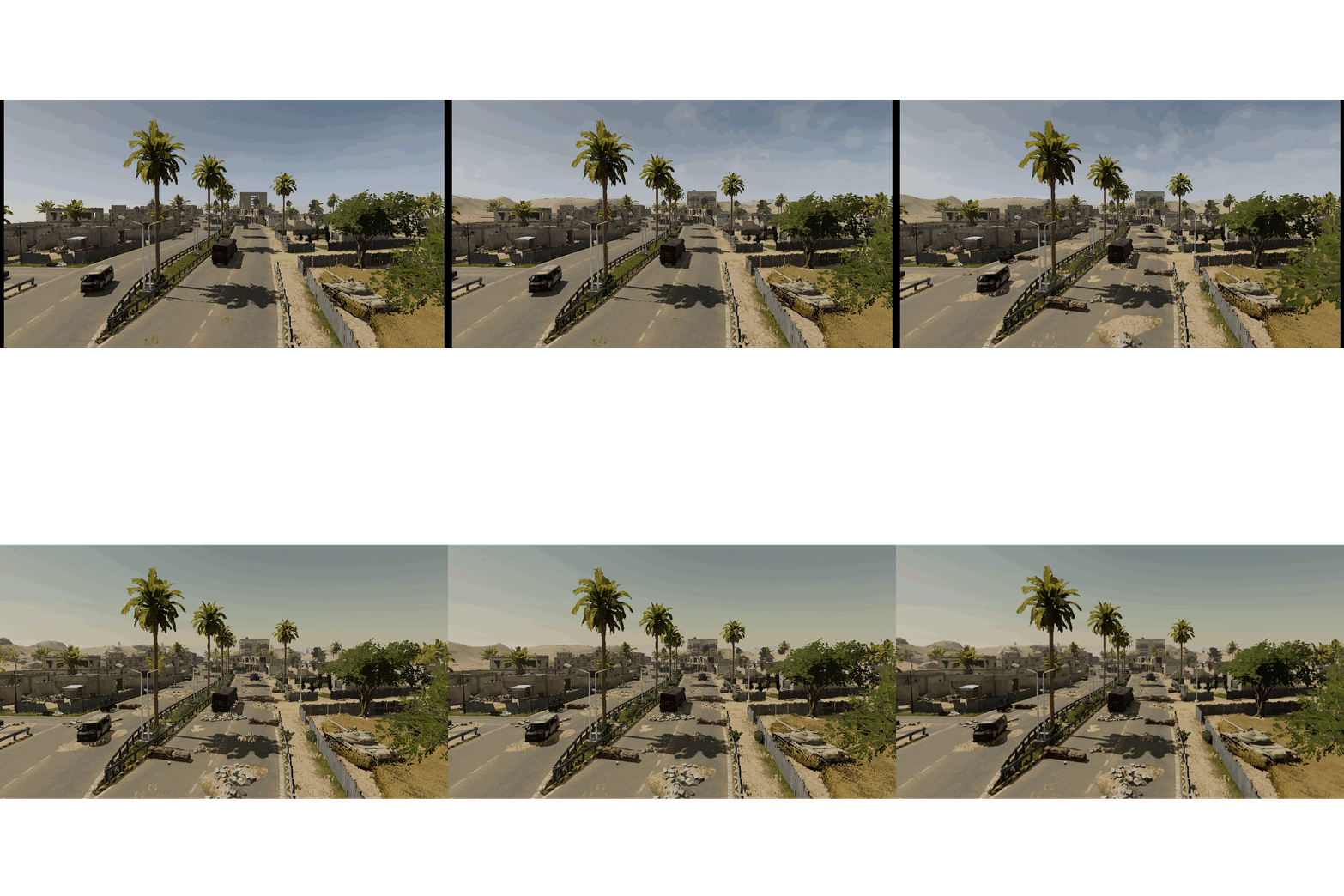
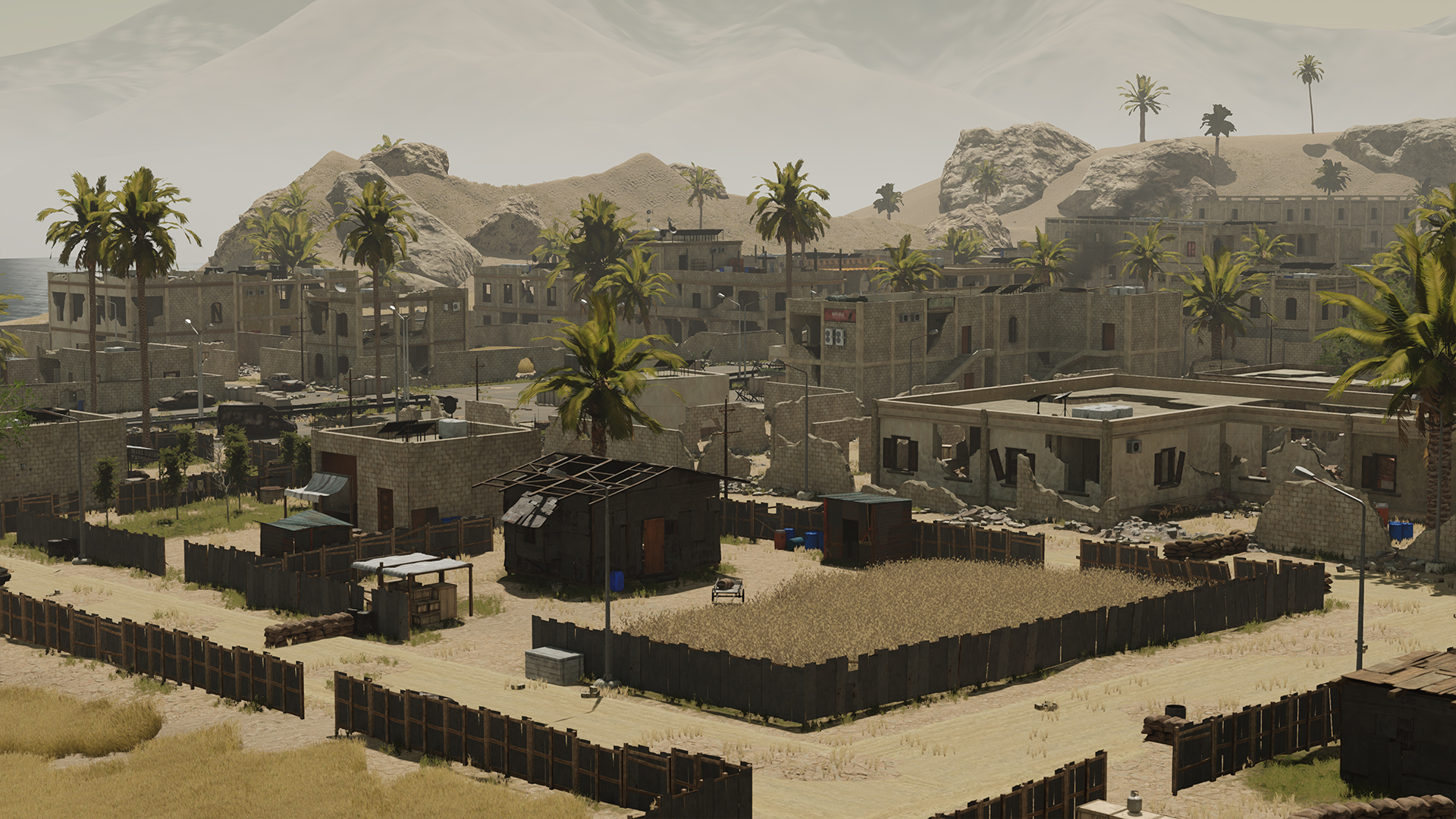
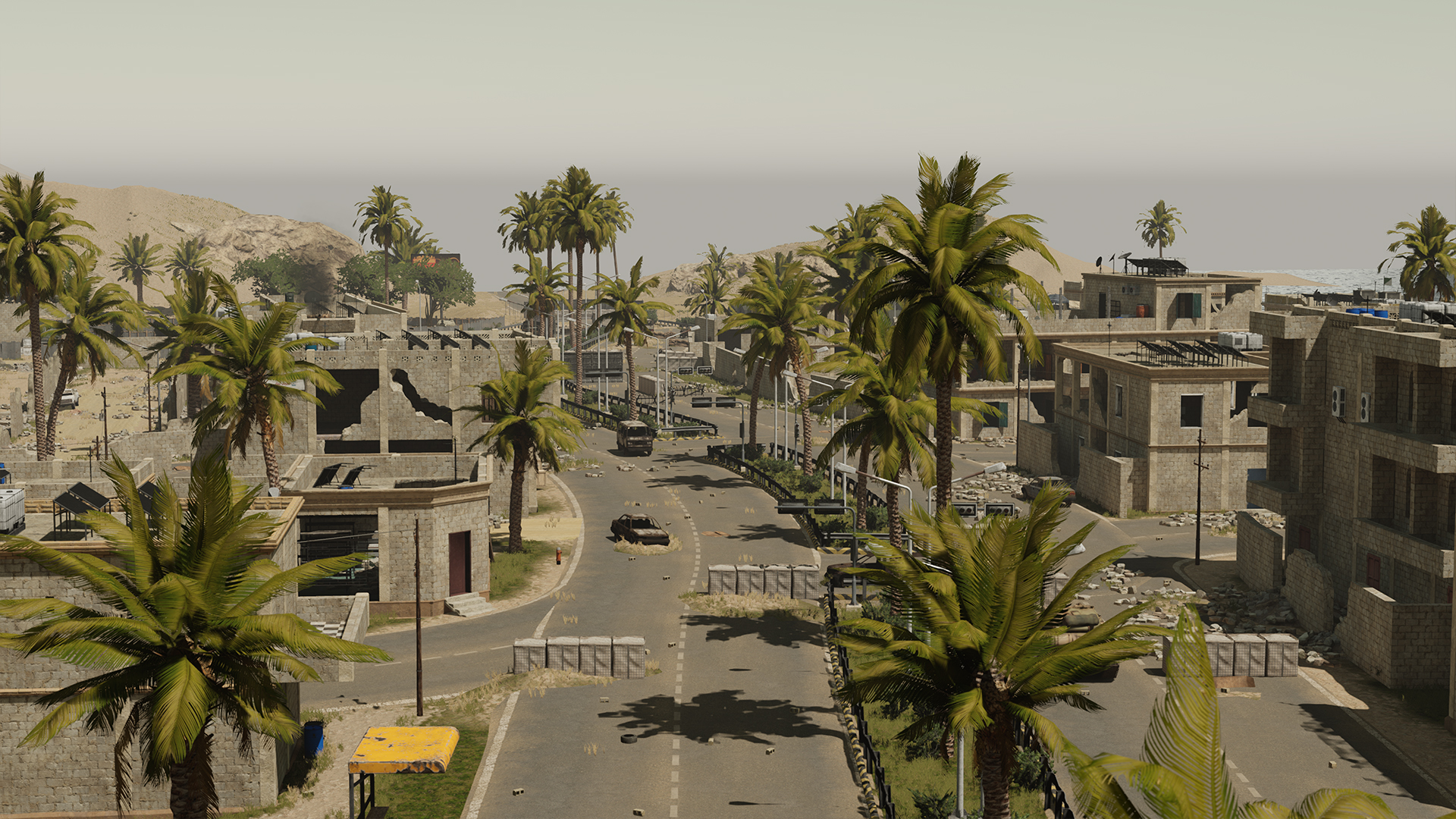
The final result was a cohesive, playable environment that captured both the dense atmosphere of the source material and the engaging rhythm of a designed gameplay space. By grounding the design in real-world references while iterating through structured phases—sketching, whiteboxing, architectural definition, and quadrant refinement—I was able to create a map that feels authentic, fun, and complete.
Gallery
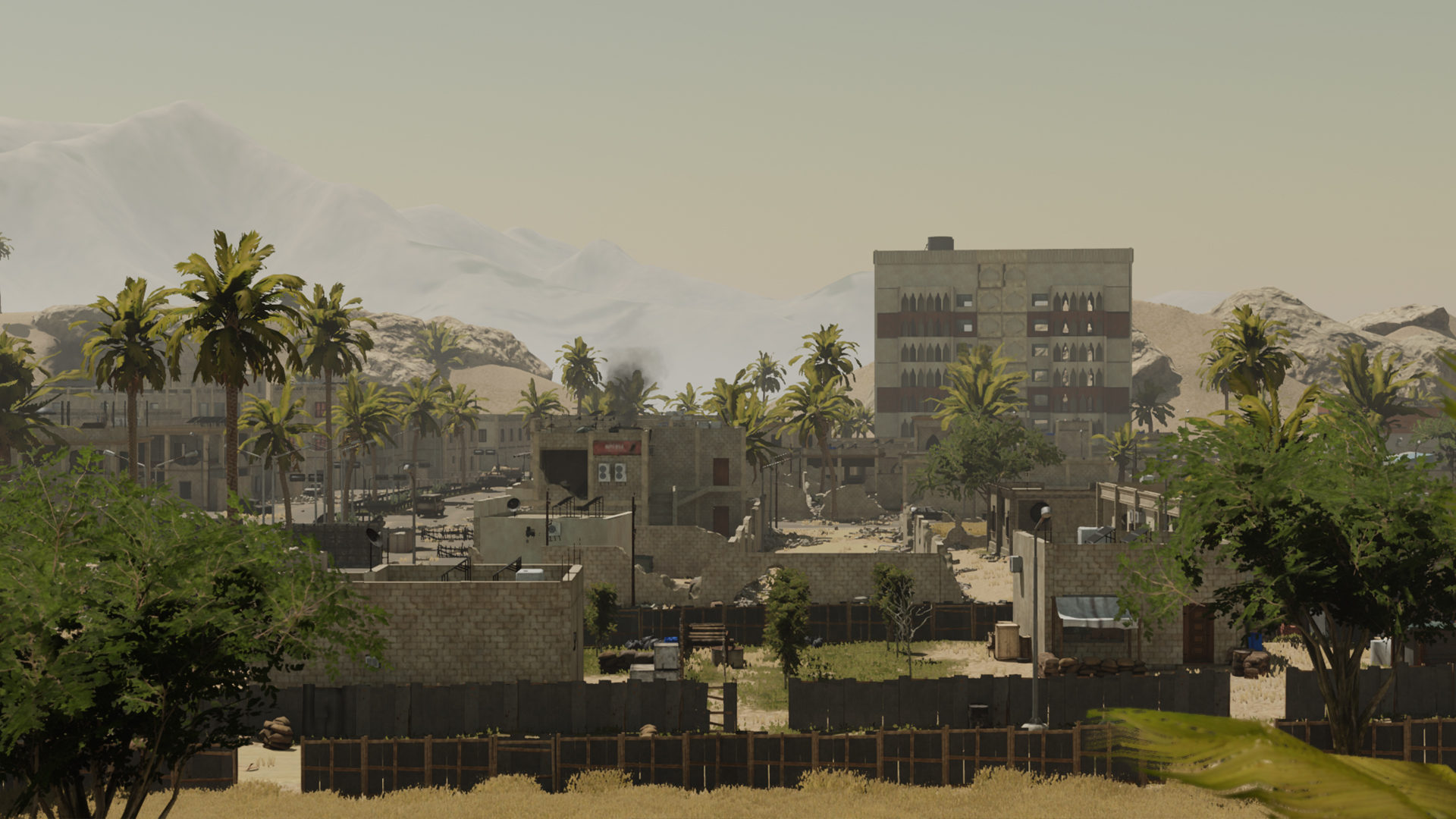
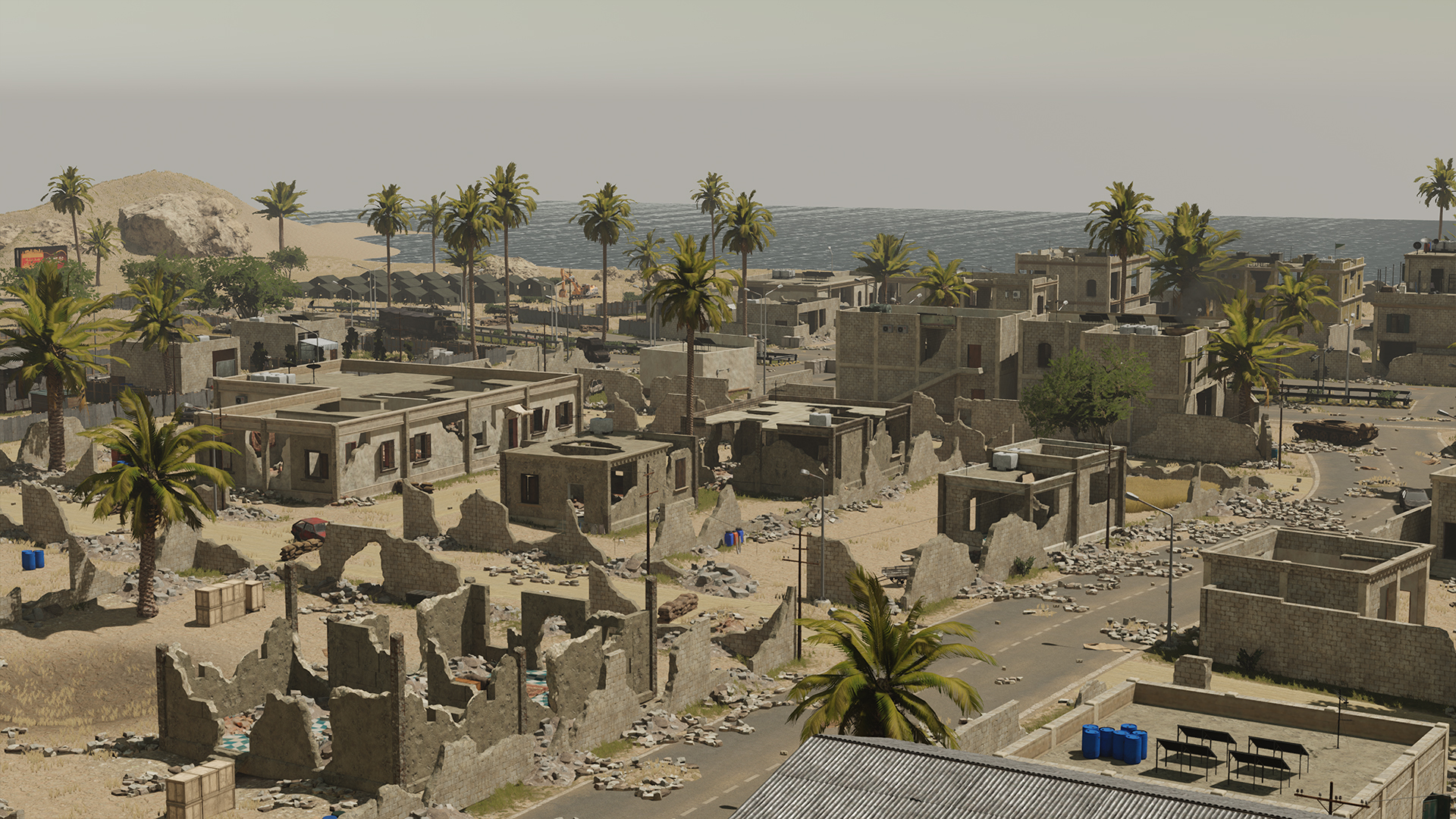
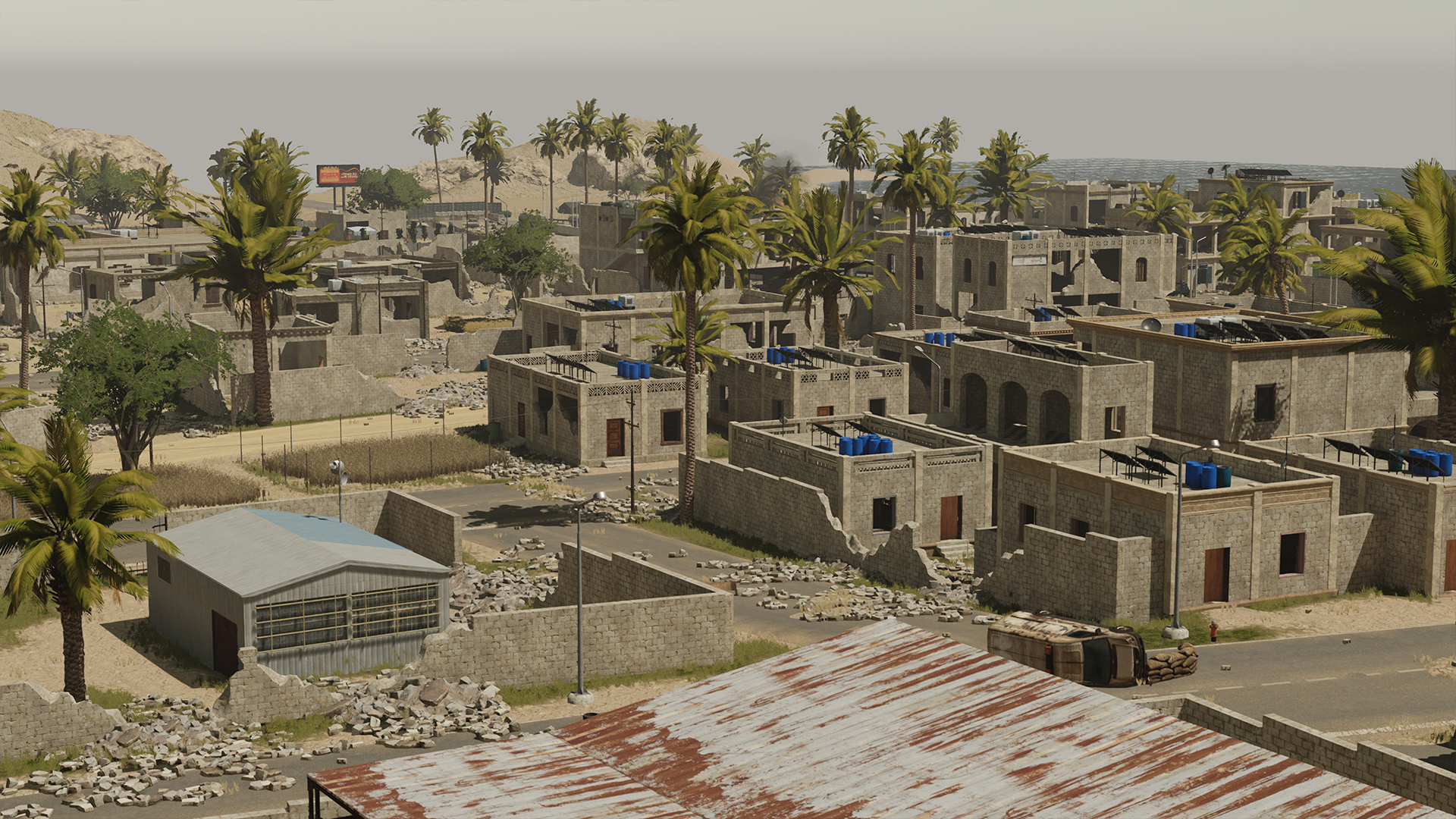
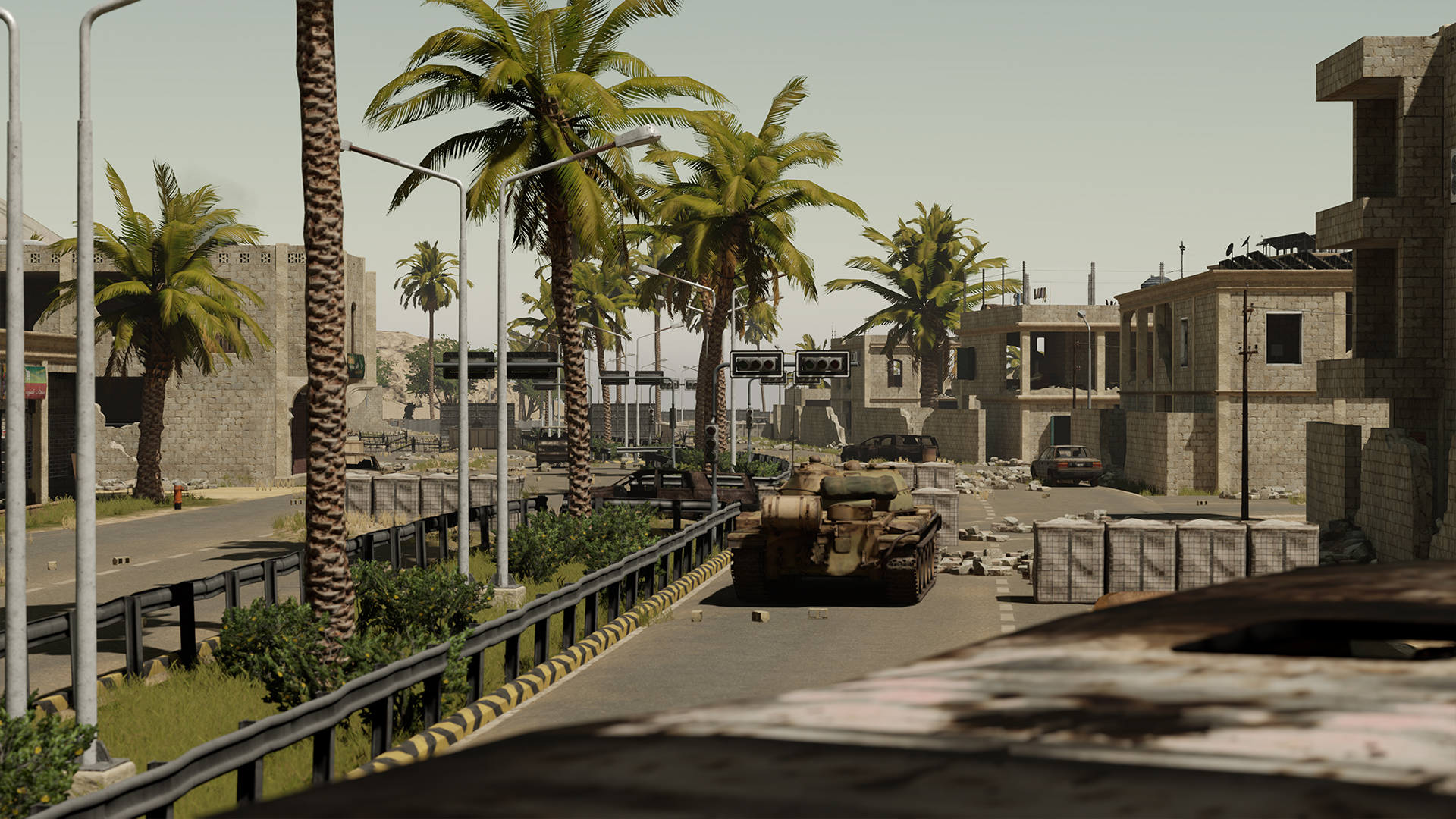
To quickly explore the concept, I sketched the block on a whiteboard, experimenting with different player paths and objective placements. These early drawings allowed me to test how navigation and combat encounters could flow within the space.